
— Digestive Health at Pompeii
Hiatal Hernia Repair
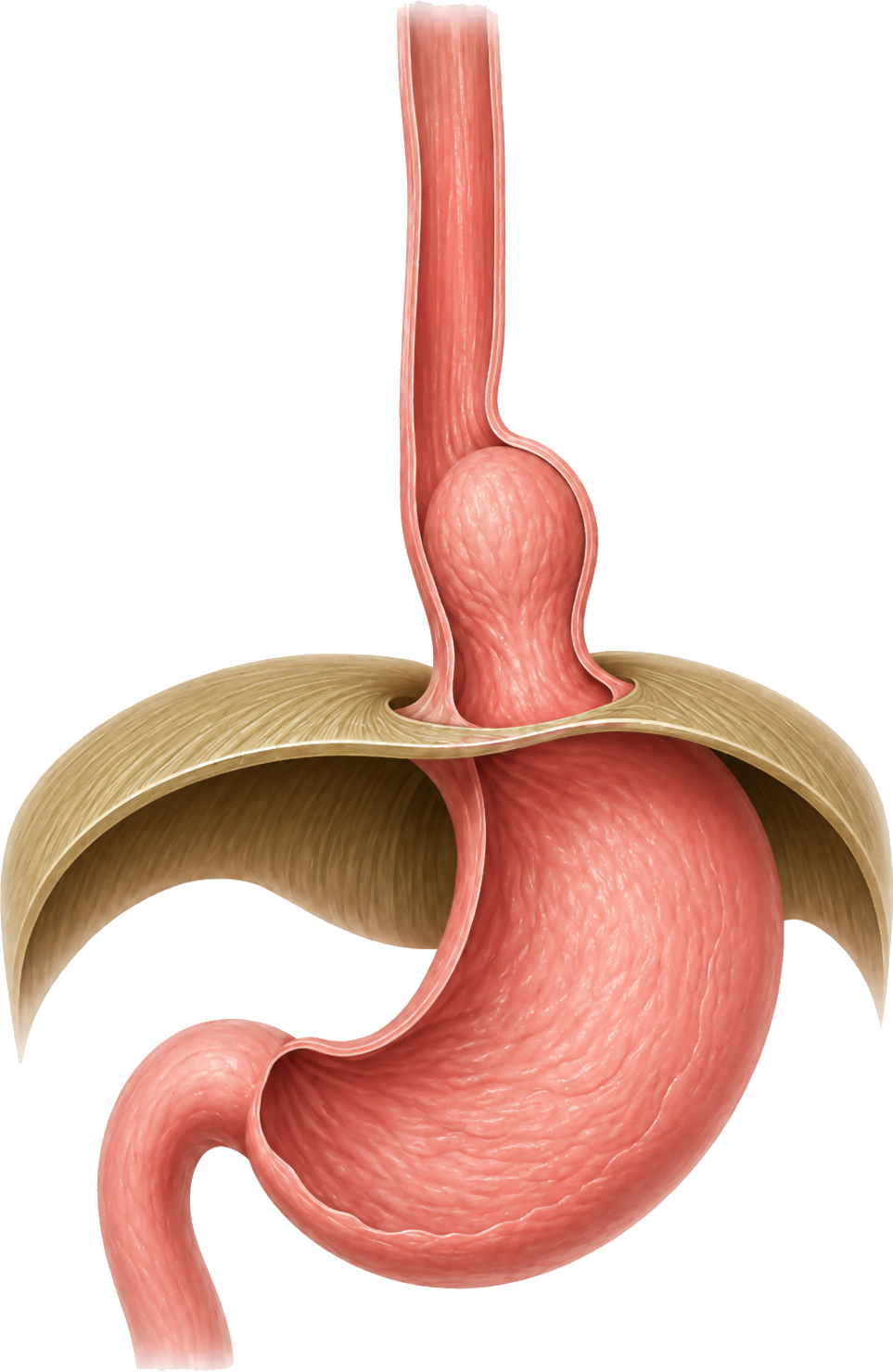
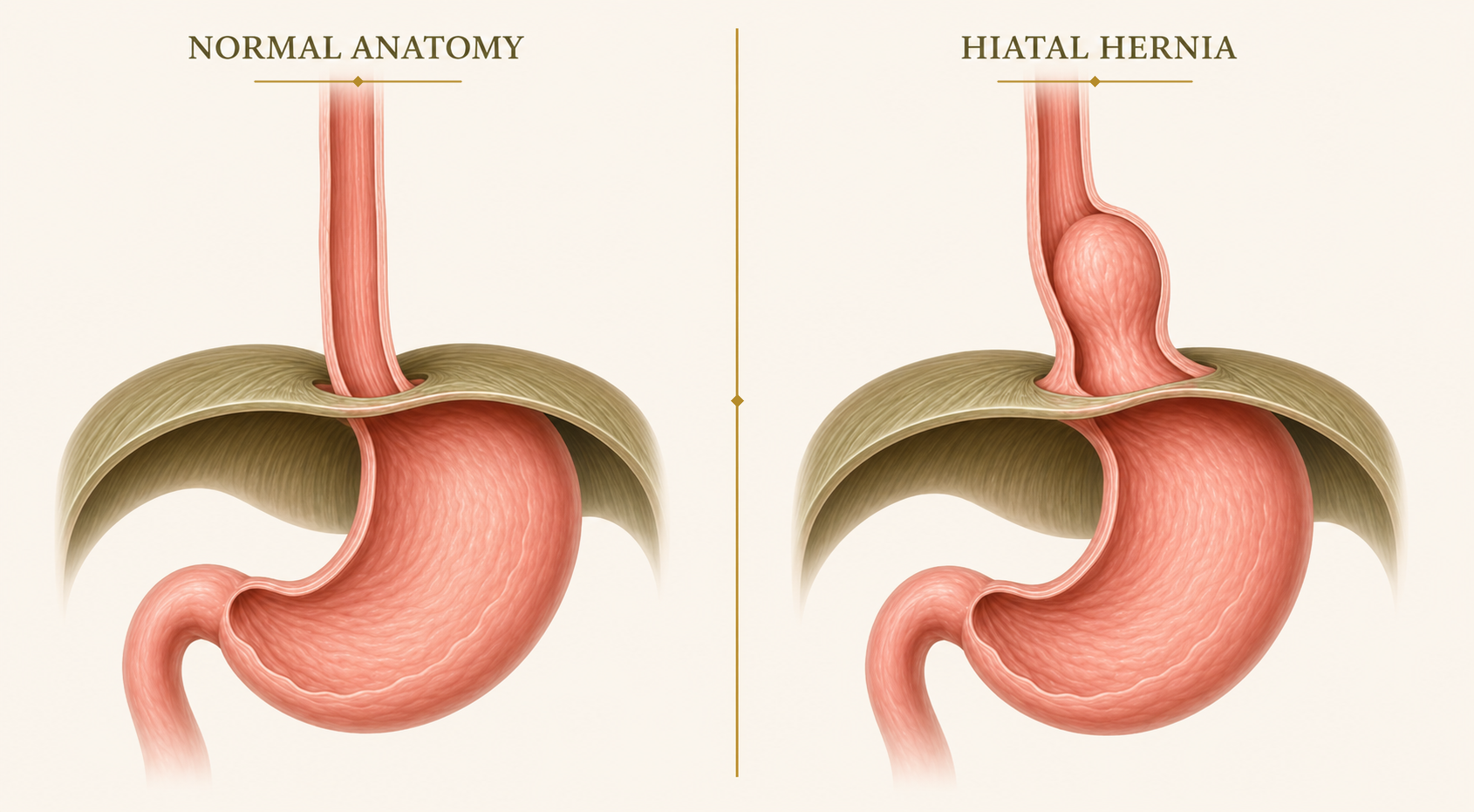
A hiatal hernia occurs when part of the stomach pushes upward through the diaphragm and enters the chest area. A minimally invasive repair may provide lasting relief from chronic acid reflux and severe heartburn.
— Understanding the condition
What is a hiatal hernia?
The diaphragm is the muscle separating the chest from the abdomen. A natural opening allows the esophagus to pass through it. A hiatal hernia develops when the upper stomach moves through this opening into the chest.
Some people have no symptoms. Treatment depends on the hernia’s size, severity, and whether it is causing reflux or other complications.
Lifestyle changes or medication may help manage mild symptoms.
A surgical repair may be recommended when symptoms are persistent or the hernia is more significant.
The appropriate treatment is determined after medical evaluation.
— Symptoms to discuss
How a hiatal hernia may feel
Symptoms can overlap with other conditions. A medical evaluation is important, especially for new, severe, or worsening chest or abdominal symptoms.
Heartburn or acid reflux
Burping or bloating
Chest or upper-abdominal discomfort
Feeling full quickly
Difficulty swallowing
Nausea
— Minimally invasive care
How is it repaired?
A hiatal hernia repair is generally performed laparoscopically through small incisions. The stomach is carefully returned below the diaphragm, and the opening may be tightened to help keep the stomach in its proper position.
The procedure typically takes approximately 30–60 minutes, although the treatment plan and surgical time depend on the patient’s anatomy and whether it is performed with bariatric surgery.
Your surgeon will explain the recommended approach, expected recovery, potential benefits, and surgical risks after reviewing your medical history.
Why treatment may matter
Relief from persistent heartburn and regurgitation
Reduced irritation caused by ongoing acid exposure
Improved swallowing comfort when symptoms are hernia-related
Correction of the stomach’s position through the diaphragm
— When symptoms continue
Possible concerns if it remains untreated
An untreated hiatal hernia does not cause complications in every patient. When it produces ongoing reflux or worsening symptoms, however, it may contribute to the following concerns.
⚠︎ Frequent heartburn and regurgitation
⚠︎ Difficulty swallowing from scarring or narrowing
⚠︎ Inflammation or ulcers in the esophagus
⚠︎ Barrett’s esophagus after long-term acid exposure
⚠︎ Bleeding and anemia
⚠︎ Increasing chest pressure, pain, or shortness of breath
Chest pain, significant shortness of breath, vomiting blood, black stools, or difficulty swallowing may require prompt medical attention.
During bariatric surgery
$400
Add-on repair performed alongside a Gastric Sleeve, Gastric Bypass, or Revision procedure.
Standalone repair
$3,500
Hiatal hernia repair performed as an independent surgical procedure.
Pricing and eligibility are subject to medical evaluation. Additional testing or services may affect the final treatment plan.
— Straightforward pricing
Two treatment options
Hiatal hernia repair may be performed with bariatric surgery or as a standalone procedure, depending on your medical needs.
— Ready when you are
Find out whether a hiatal hernia repair may be right for you.
Complete a brief health questionnaire or speak with a patient coordinator about your symptoms, previous testing, and surgical options.