
— Digestive Health at Pompeii
Gallbladder Removal
The gallbladder is a small, pear-shaped organ beneath the liver that stores bile and helps the body digest fats. Although it supports digestion, it is not essential: after removal, the liver continues producing bile, and most people can digest food and live normally without it.
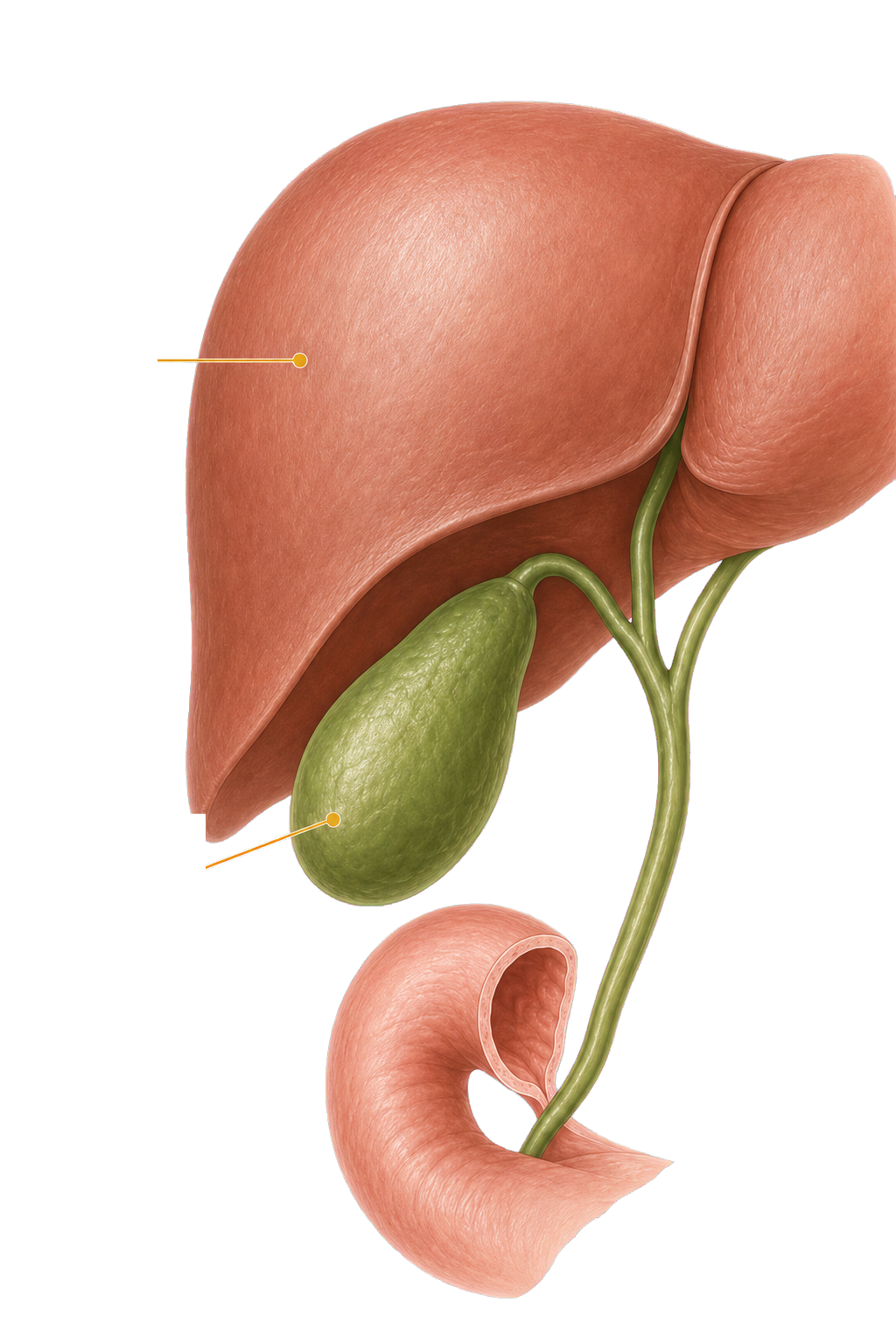
Liver
Gallbladder
— When surgery may be considered
Why might the gallbladder need to be removed?
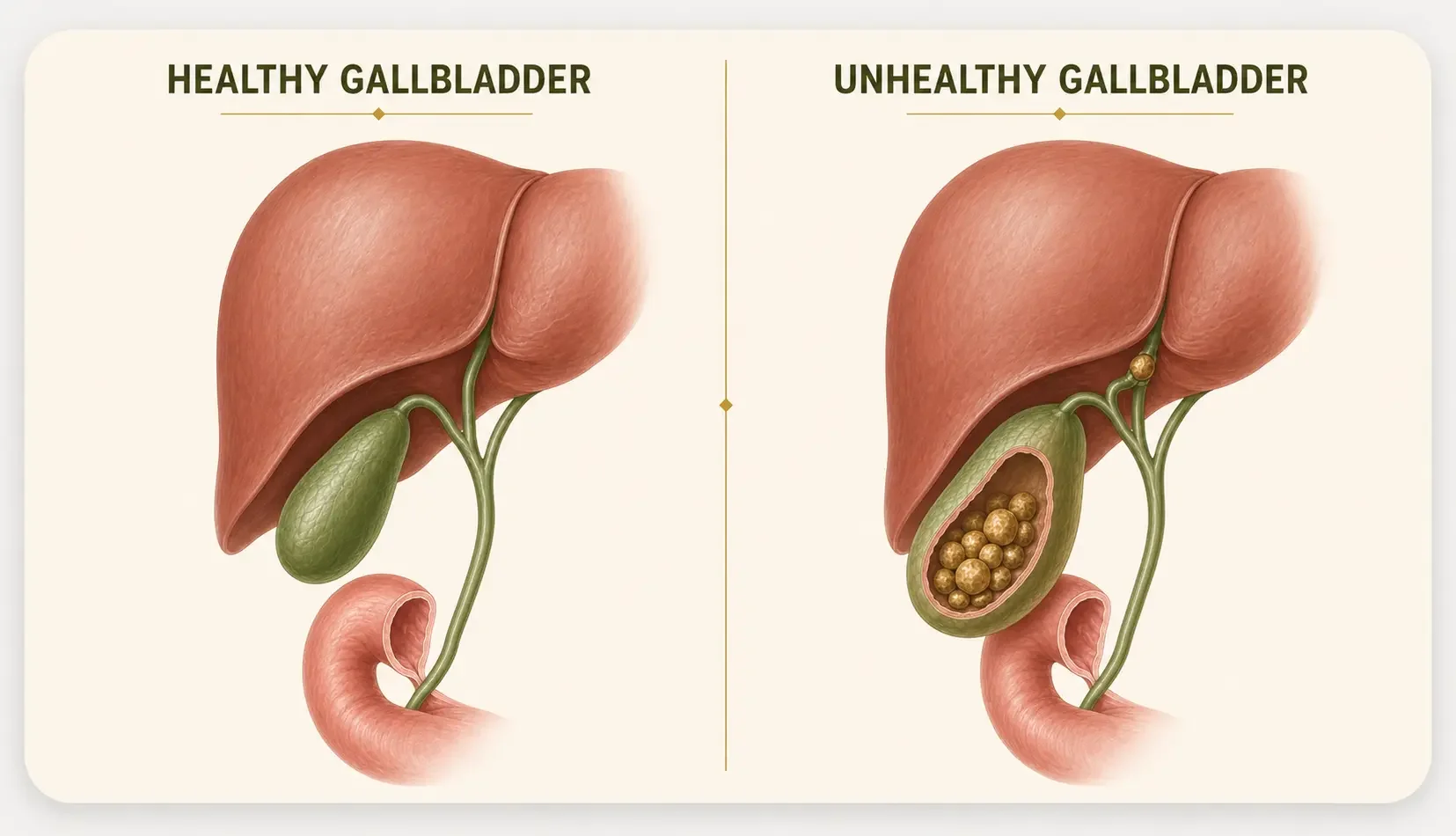
A cholecystectomy is the surgical removal of the gallbladder. A patient may be evaluated for this procedure when one or more of the following conditions are present:
Painful or symptomatic gallstones
Gallbladder inflammation (cholecystitis)
Blocked bile ducts
Gallstone pancreatitis
Gallbladder dysfunction
Gallbladder polyps
— Symptoms to discuss with your doctor
Common signs of gallbladder problems.
Symptoms can vary. Seek prompt medical care for severe or worsening pain, fever, jaundice, or persistent vomiting.
Upper-right or upper-middle abdominal pain
Indigestion, bloating, or gas
Pain spreading to the back or right shoulder
Fever or chills
Pain after eating, especially fatty foods
Yellowing of the skin or eyes
Dark urine or pale-colored stools
Nausea or vomiting
— Medical evaluation
How is the need for surgery determined?
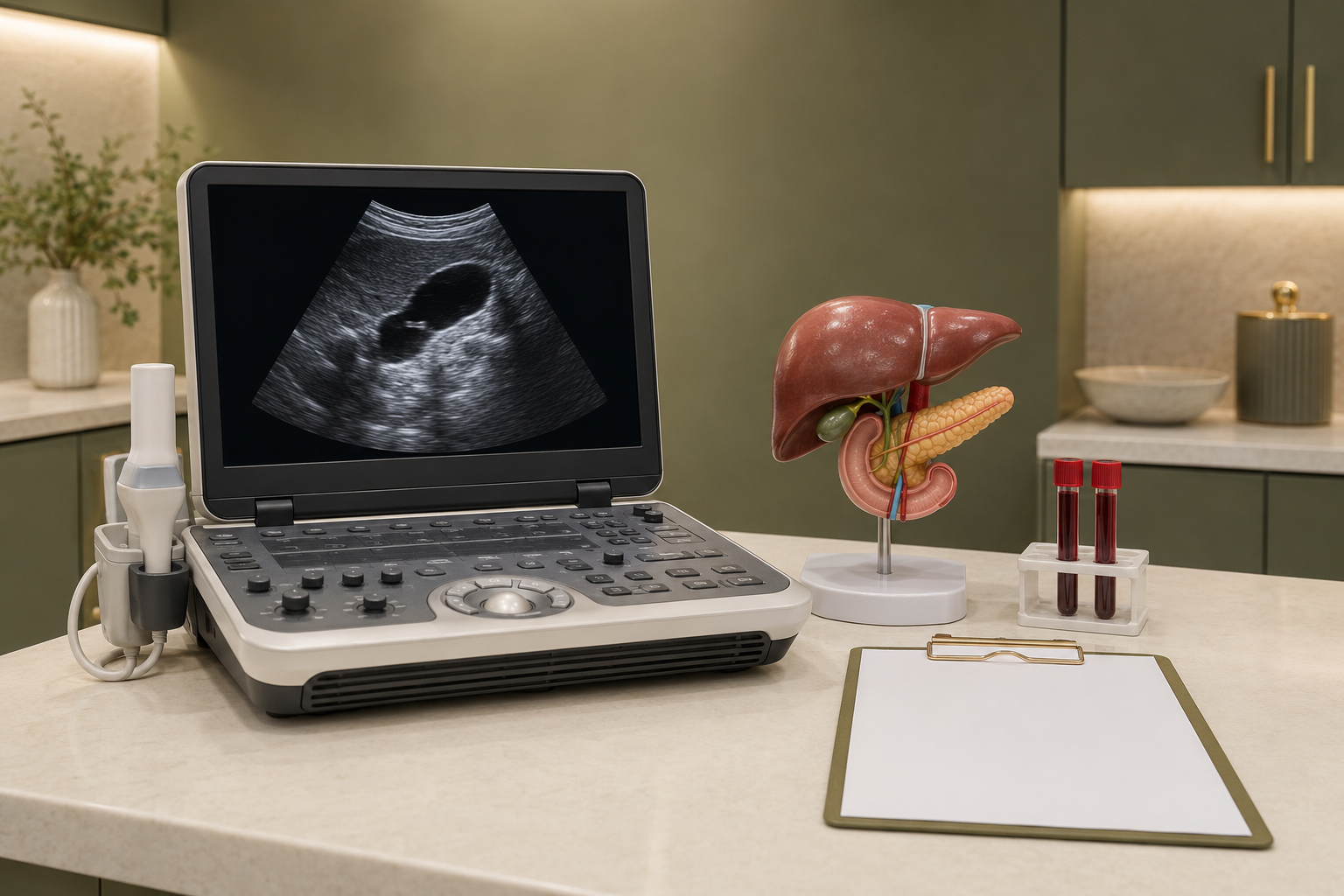
A healthcare provider will review your symptoms and medical history. Testing may include:
Blood tests
Abdominal ultrasound
Additional imaging when medically indicated
Gallstones without symptoms do not always require surgery. A qualified surgeon should make the final recommendation after reviewing your complete evaluation.
— Ready when you are
Find out whether gallbladder removal may be right for you.
Complete a brief health questionnaire or speak with a patient coordinator about your symptoms, previous testing, and surgical options.